One of the goals of the Croatian Red Cross is to promote and protect health, prevent diseases and raise the health and environmental culture of citizens. Through health education classes, workshops, public forums, counselling and other activities, carried out by volunteers and professional associates, citizens are motivated to adopt healthy life habits and take responsible care for their own health.
The Croatian Red Cross is a partner to health institutions in promoting health, first aid and implementing preventive activities, including response in emergency situations and epidemics.
Special emphasis is placed on the prevention of chronic non-communicable diseases, the promotion of healthy lifestyles and the strengthening of community resilience to public health threats. In accordance with the Strategy 2030 of the International Federation of Red Cross and Red Crescent Societies, the Croatian Red Cross contributes to the protection of the health of individuals and communities and to strengthening the capacities for preparedness and response to health crises and disasters.
Healthy Living
The National Healthy Living Program was launched in 2015 at the initiative of the Ministry of Health as a program for promoting and improving the health of all residents of the Republic of Croatia. The goal of the program is to improve the quality of life through three priority areas - proper nutrition, physical activity and obesity prevention, mental health and sexual health.
The program is aimed at the prevention of chronic non-communicable diseases, as the leading cause of morbidity and mortality in Croatia, by promoting healthy living habits and reducing risk factors such as improper diet, physical inactivity, smoking, excessive alcohol consumption and obesity.
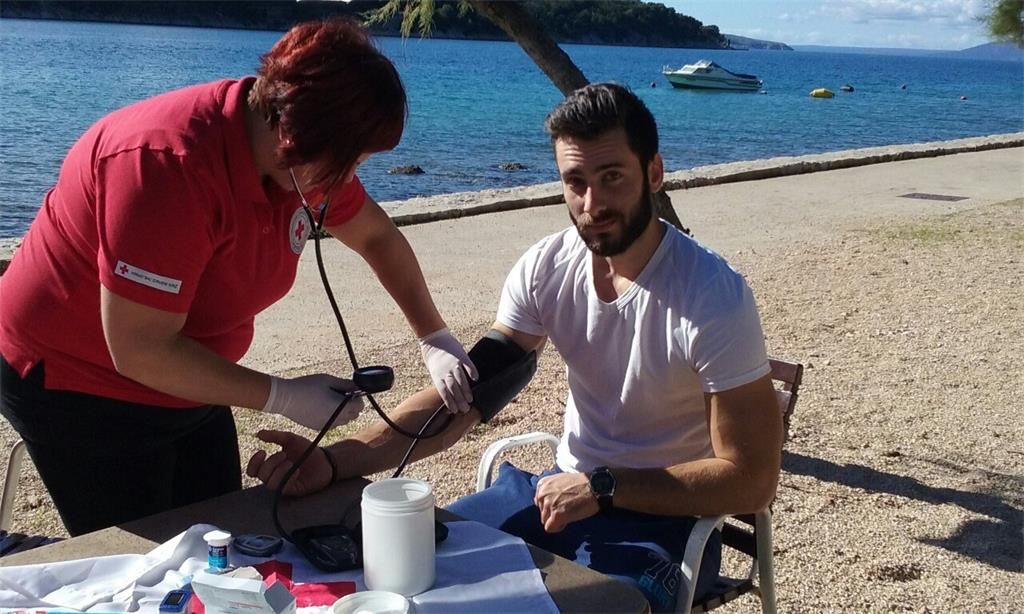
The Croatian Red Cross actively participates in the implementation of the program through education and preventive activities in local communities. In cooperation with its local branches, it organises health actions such as blood pressure and blood sugar measuring, promoting physical activity and staying in nature and other activities to foster the adoption of healthy life habits by children and adults.
Prevention and control of tuberculosis
Tuberculosis is an infectious disease that typically affects the lungs but can also affect other organs. Although curable if timely detected and properly treated, it remains a significant public health challenge in many parts of the world, especially among vulnerable populations.
The Croatian Red Cross participates in informing citizens about the prevention, early detection and treatment of tuberculosis and supports activities that reduce the risk of the spread of the disease. Special attention is paid to educating citizens and raising awareness of the importance of timely treatment.
World Tuberculosis Day is celebrated on 24 March every year, and Tuberculosis Week from 14 to 21 September. On these occasions, the Croatian Red Cross local branches across the country organise lectures, workshops, public health actions and other educational activities with the aim of informing citizens about the prevention and suppression of tuberculosis.
Hygiene and health
Proper hygiene is one of the most important measures in protecting against the occurrence and spread of infectious diseases among humans. Personal hygiene includes regular maintenance of cleanliness of the body, clothing and footwear. Improper hygiene can cause the development and spread of infectious diseases, the agents of which are transmitted by hands and introduced into the human body by droplets through the mouth, nose, mucous membrane of the eye or through damaged skin.
Modern hygienic measures are implemented on the basis of established regulations and other sanitary measures for health protection as well as other hygienic needs (communal hygiene of settlements, public facilities, means of transport), food and water hygiene (safe food and water), mental hygiene (mental health care).
One of the goals in the work of the Croatian Red Cross is to alleviate human suffering, especially that caused by natural, environmental, technological and other accidents and armed conflicts, with the consequences of mass casualties and the occurrence of epidemics. The Croatian Red Cross helps to organise health protection for displaced persons and international protection seekers at the reception centres in Zagreb and Kutina, where it conducts various activities such as: education on hygiene and first aid, procurement of medical supplies, distribution of hygiene kits, clothing and footwear, and psychosocial support.
Health protection from extreme heat
The past decade has seen an increase in temperatures, especially during the summer period, which affects the health of millions of people around the world. Heat waves pose an increasing health risk, especially for children, the elderly, chronic patients, and people who stay or work outdoors.
The Croatian Red Cross is a member of the Ministry of Health Working Group on the Health Impact of Climate Change and participates in the implementation of the Protocol on Procedures and Recommendations for Heat Protection. In cooperation with the relevant institutions, it contributes to informing the public about preventive health protection measures during heat waves.
The Croatian Red Cross makes recommendations to the Croatian Red Cross local branches that provide support to the elderly, the infirm and the socially disadvantaged. In case of heat stroke symptoms, aid should be sought immediately by calling 194 (Emergency Medical Service) or 112 (General Emergency Services Number).
Health protection from extreme cold
tremely cold weather poses a health risk, especially for vulnerable groups such as young children, the elderly, chronic patients, the homeless, and people who work outdoors. Exposure to low temperatures can cause a variety of health conditions, from milder symptoms to life-threatening hypothermia.
The Croatian Red Cross is a member of the Ministry of Health Working Group on the Health Impact of Climate Change, which prepares recommendations and instructions for health protection from severe cold. In cooperation with the relevant institutions, it participates in informing the public about preventive measures during cold waves.
In the event of hypothermia symptoms, aid should be sought immediately by calling 194 (Emergency Medical Service) or 112 (General Emergency Services Number).
